
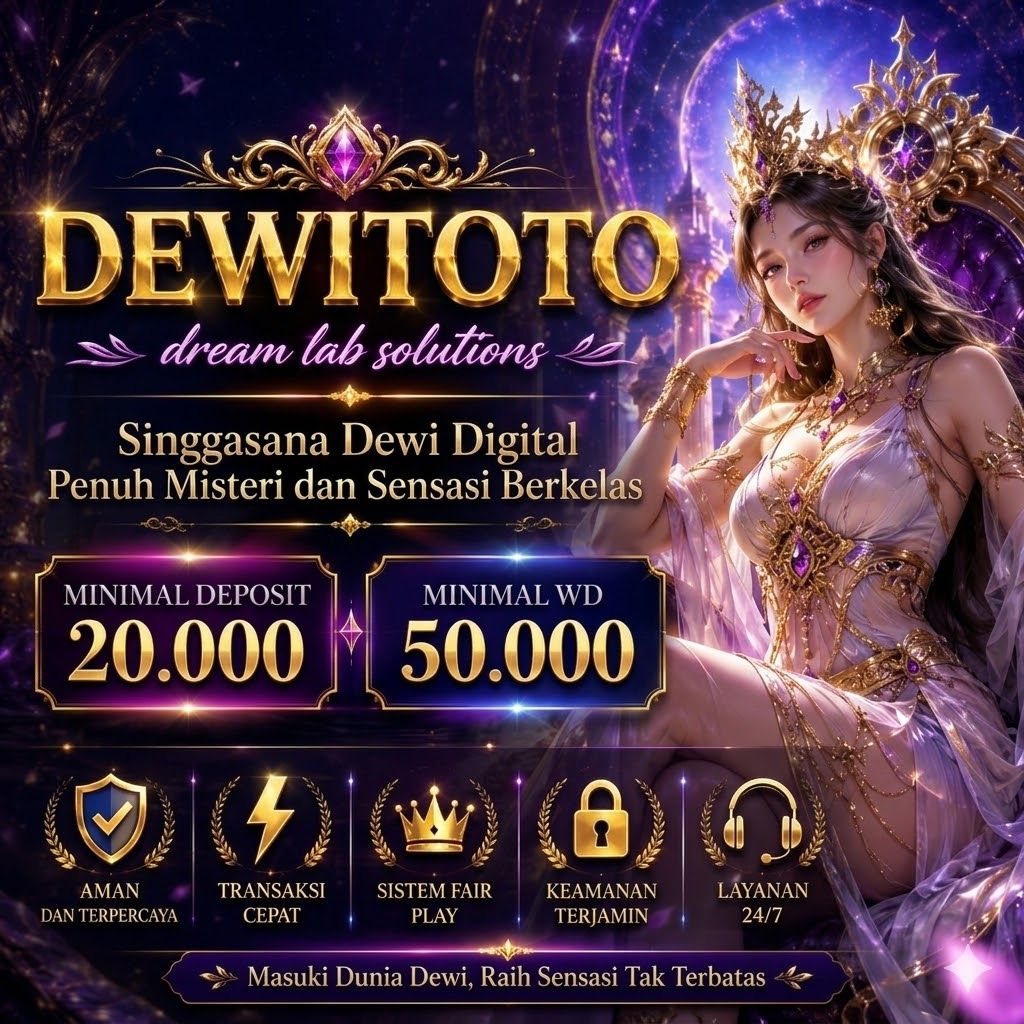


DEWITOTO | dream lab solutions Singgasana Dewi Digital Penuh Misteri dan Sensasi Berkelas
DEWITOTO DEWITOTO hadir dengan nuansa elegan layaknya istana dewi keberuntungan, membawa pengalaman hiburan digital yang berbeda, penuh atmosfer premium, kejutan seru, dan vibes eksklusif untuk setiap member.
REVIEW TERATAS MEMBER DEWITOTO
"Serius deh, tiap login DEWITOTO tuh rasanya beda. Kadang dapet momen seru yang nggak disangka-sangka. Jadi selalu ada cerita seru buat dibagi ke teman"
2026-04-11"Ini yang bikin Gua betah, sensasinya dapet banget. Ada rasa tegang tapi justru itu yang bikin seru dan pengen balik lagi."
2026-04-12"Hampir tiap waktu ada aja event baru. Jadi nggak cuma main biasa, tapi juga bisa ikutan misi-misi game seru yang bikin pengalaman makin lengkap."
2026-04-12"Di sini banyak Member aktif, jadi suasananya rame. Kadang seru juga lihat strategi orang lain atau sekadar sharing pengalaman!"
2026-04-14"Mau lagi santai atau lagi pengen tantangan, semuanya ada. Tinggal pilih aja sesuai mood kita, jadi fleksibel banget."
2026-04-15"Kadang udah di ujung banget, itu yang bikin greget. Malah jadi makin semangat buat coba ngegame lagi dan lagi."
2026-04-17


